 Shivani Ayurveda
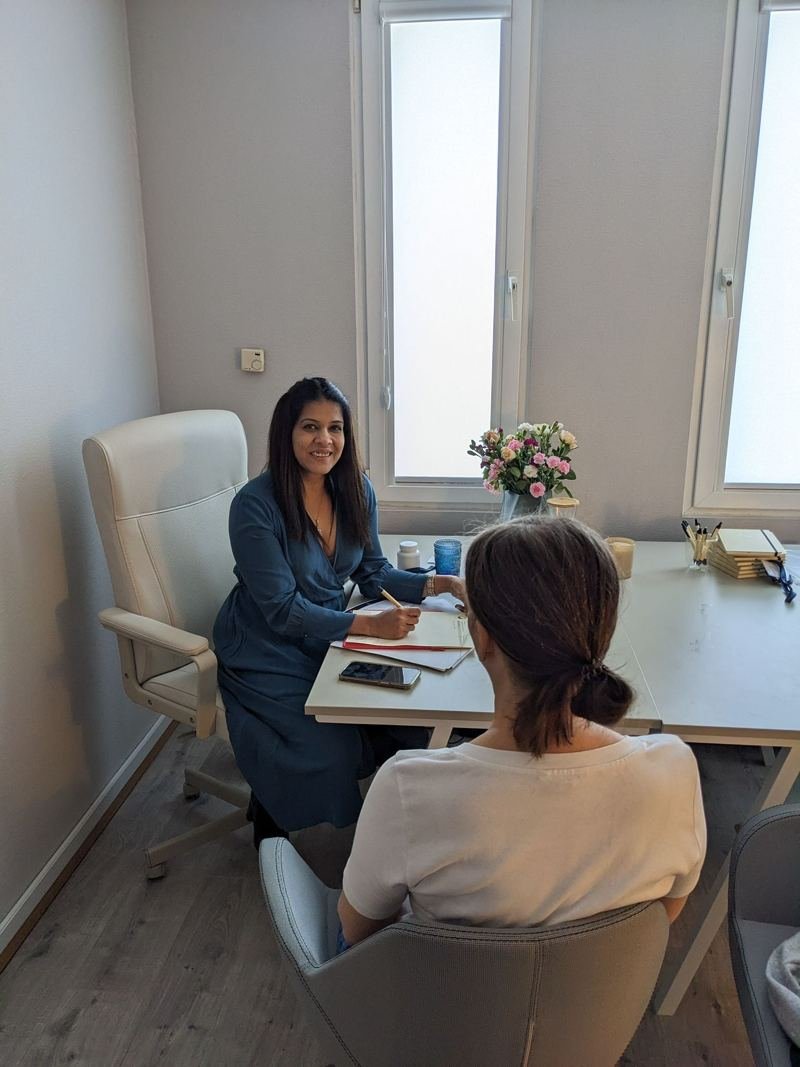 Intro video · Level 2 with Dr. Shivani

A course by Dr. Shivani Sood, Ayurvedic doctor
Professional Ayurvedic Consultant
Level 2: Clinical Practice, Herbology & Consultancy Skills
Early-bird €2,500 instead of €3,200, until 28 February 2027 · Next intake April to May 2027 · At most 12 students · How Level 2 follows Level 1
You know the doshas. You can read a constitution, plan a meal and guide a calmer mind. Now it’s time to work with real people. Over about eight months and 600 hours of training with Dr. Shivani, in a small group of at most 12 students, Level 2 takes you from foundation to professional practice: advanced diagnostics, herbology, Ayurvedic support for common and chronic conditions, deeper psychological work, and the consultation skills to bring it all together. You practise on real clients under Dr. Shivani’s supervision, present your cases in class, and learn to step out with confidence as a visible Ayurvedic consultant. It includes two live classes every week, eight professional masterclasses, recorded lessons with course notes, and two years of platform access.
Your path through the levels
Level 2 builds directly on Level 1. Everything you learned there, from Prakriti to the client case presentation, you now practise with real people.
What you will learn
- Professional consultations: how to prepare, structure and time a consultation, and lead it with confidence and ethics.
- Deeper psychological work: a clear structure for supporting people emotionally, holding space safely, and recognising psychological red flags.
- Advanced Ayurvedic diagnostics: the six stages of disease, Dhatus, Ojas, Tejas and Prana, and advanced pulse and tongue assessment.
- Herbology: Ayurvedic herbs, oils and their dosha actions, and how to design herbal recommendations safely.
- Ayurvedic support for common and chronic conditions: digestion, the respiratory system, the nervous system, joints, hormones and autoimmune conditions, always alongside medical care.
- Women’s health: Ayurvedic support through the menstrual cycle, fertility, perimenopause and menopause.
- Cleansing and Panchakarma: herbal cleansing for the liver, kidneys, spleen and colon, and an in-depth introduction to Panchakarma and Marma.
- Food as therapy: the 20 qualities, 26 fruits and 28 vegetables, milk and legumes, food combining and menu plans for double-dosha clients.
- Real client practice: supervised consultations with three people you bring, more clients arranged by Dr. Shivani at a later stage, and your own cases presented in class.
- Visibility: overcome the fear of being seen, and give your first public talk as an Ayurvedic consultant.
Who this course is for
- Level 1 graduates who want to move from lifestyle guidance to professional consultancy.
- Practising wellness professionals such as yoga teachers, therapists and coaches with Ayurvedic foundations, who want clinical depth.
- Future Ayurvedic consultants who want supervised experience with real clients before working independently.
Entry requirement: completion of Level 1 (live course), or equivalent Ayurvedic training confirmed in a short call with Dr. Shivani. Level 1 self-study students join after a short call with Dr. Shivani and passing the Level 1 exams.
Seven elements of the program
How the course runs
Each block of recorded lessons is followed by two weeks without new lessons: a masterclass week, then a practice week with a short test. That gives you time to study and put each block into practice before the next one starts.
| Block | Lessons | Then |
|---|---|---|
| 1. Nutrition and menu planning | Weeks 1–4 | Masterclass week 5 · Practice week 6 |
| 2. Ayurvedic concepts in practice | Weeks 7–10 | Masterclass week 11 · Practice week 12 |
| 3. Herbs, oils and therapies | Weeks 13–16 | Masterclass week 17 · Practice week 18 |
| 4. Body systems | Weeks 19–20 | Masterclass week 21 · Practice week 22 |
| Case study practice | Weeks 23–26 | Case presentations and Masterclass 8 |
| Practical phase, then final exam | About 4 weeks | Supervised consultations with 3 people you bring, 1 public talk, then the written and oral exams |
- Two live classes a week on set days (usually Tuesday and Thursday), early in the morning: about 6:30 or 7:00 am CET (6:00 am UK time). About 3 hours a week.
- About five recorded lessons a week in the lesson weeks, each module ending with a short quiz.
- A holiday break of about 2 weeks during the course.
- Every class is recorded, with two years of access to the platform.
Course syllabus
Weeks 1 to 6 · Block 1Nutrition and menu planning
In Ayurveda, food is judged by what it does to each dosha, not by its calories. Learn to suggest cereals, fruits, vegetables, dairy and legumes for each body type, then build full nutrition plans.
- Module 1: The Gunas and cereals1.1 Case study 1 · 1.2 The 20 Gunas · 1.3 Cereals · 1.4 Case study 2 · Module quiz
- Module 2: Fruits and vegetables2.1 Fruits, part 1 · 2.2 Fruits, part 2 · 2.3 Vegetables, part 1 · 2.4 Vegetables, part 2 · 2.5 Case study 3 · Module quiz
- Module 3: Milk, dairy, beans and legumes3.1 Milk and milk products · 3.2 Beans and legumes · 3.3 Dairy and legumes as support · 3.4 Case study 4 · Module quiz
- Module 4: Food combinations and nutrition plans4.1 Food combinations · 4.2 Sample nutrition plans · 4.3 Plans for tricky and double-dosha cases · 4.4 Case study 5 · Self-study: a full consultation with a friend or family member · Module quiz
- Weeks 5 and 6: masterclass week and practice weekMasterclass 1: professional consultation skills · Masterclass 2: psychological work with clients, part 1 · Practice: a full consultation, from Prakriti to a diet plan · Block 1 test
Weeks 7 to 12 · Block 2Ayurvedic concepts in practice
The concepts every professional consultant needs, with the correct terminology, and how to use them inside a consultation.
- Module 5: The building blocks of the body and mind5.1 Branches of Ayurveda, and the elements of the body and mind · 5.2 Types of doshas · 5.3 Dhatus and upadhatus, malas and srotas · 5.4 Case study 6 · Module quiz
- Module 6: How imbalance develops, and examining a client6.1 The six stages of disease · 6.2 Sama and nirama; shamana and shodhana · 6.3 Steps for examining a client · 6.4 Case study 7 · Module quiz
- Module 7: Daily and seasonal routines7.1 The dosha clock · 7.2 Dinacharya · 7.3 Seasons and dosha changes · 7.4 Case study 8 · Module quiz
- Module 8: Agni, Ojas, Tejas and Prana, and advanced pulse8.1 Agni and Koshta · 8.2 Ojas, Tejas and Prana · 8.3 Pulse reading, advanced · 8.4 Case study 9 · Module quiz
- Weeks 11 and 12: masterclass week and practice weekMasterclass 2: psychological work with clients, part 2 · Masterclass 3: deeper Ayurvedic assessment · Practice: a full assessment with Prakriti, Vikriti, tongue and pulse · Block 2 test
Weeks 13 to 18 · Block 3Herbs, oils and therapies
For every herb: its names, qualities, the part used, its effect on the doshas and the ways to use it. Then Ayurvedic oils and the main therapies.
- Module 9: Herbology foundations9.1 Herbology concepts · 9.2 Rasa, Virya and Vipaka · 9.3 Herbs, part 1 · 9.4 Herbs, part 2 · Module quiz
- Module 10: Kitchen and everyday herbs10.1 to 10.4 Herbs, parts 3 to 6 · Module quiz
- Module 11: The last herbs, and Ayurvedic oils11.1 Herbs, part 7 · 11.2 Ayurvedic oils, part 1 · 11.3 Ayurvedic oils, part 2 · 11.4 Case study 10 · Module quiz
- Module 12: Ayurvedic therapies12.1 Ayurvedic therapies · 12.2 Panchakarma · 12.3 Marma · Module quiz · Live: an in-depth introduction to Panchakarma
- Weeks 17 and 18: masterclass week and practice weekMasterclass 4: herbal support for gut and respiratory health · Masterclass 5: herbal cleansing · Practice: herbs, oils and therapies for a client case · Block 3 test
Weeks 19 to 22 · Block 4Body systems
Many clients arrive with a diagnosis from their doctor. Understand what is happening in the body, and support the client with food, routine, therapies and herbs, alongside their medical care.
- Module 13: The digestive system and joints13.1 and 13.2 The digestive system · 13.3 and 13.4 Joints · Module quiz
- Module 14: Nervous, respiratory, hormonal and autoimmune conditions14.1 The nervous system · 14.2 The respiratory system · 14.3 Hormonal balance · 14.4 Autoimmune conditions · 14.5 Working safely: precautions and referral · Module quiz
- Weeks 21 and 22: masterclass week and practice weekMasterclass 6: the nervous system and mental wellbeing · Masterclass 7: autoimmune and chronic inflammatory conditions · Practice: a full case with body-system support · Block 4 test
Weeks 23 to 26Case study practice
The recorded lessons are finished. Each week you present cases you have taken, from people you know, and the group adds to them under Dr. Shivani’s guidance.
- Seven case presentation classesPreparation, analysis, consultation planning and next steps, with Dr. Shivani’s feedback.
- Masterclass 8: women’s health and hormonal balanceAyurvedic support for irregular or painful periods, PCOS, endometriosis, fertility, perimenopause and menopause.
- Final feedbackEach student’s case work, and what to work on next.
After Week 26Practical phase and final exam
Put it all together with real clients, then show what you know.
- Three supervised consultationsYou bring three people and consult them: you prepare the plan, assess and interpret, and write the recommendations; Dr. Shivani supervises and gives feedback. She arranges more clients for you at a later stage.
- One public talkAn educational talk on an Ayurvedic topic chosen with the team.
- Written and oral final examsThen the Professional Ayurvedic Consultant, Level 2 certificate.
Eight professional masterclasses
- Professional consultation skills: preparing a consultation, its structure and flow, time management, confidence and ethical communication.
- Deeper psychological work with people (two parts): emotional patterns and blocks, deep listening, holding space safely, and psychological red flags.
- Deeper Ayurvedic diagnostics: the Ayurvedic understanding of imbalance and disease, and how classical principles are applied today.
- Herbal support for common complaints: digestion, flu and fever, cough and the respiratory system.
- Herbal cleansing: the Ayurvedic view of detoxification, and herbal support for the liver, kidneys, colon and spleen.
- The nervous system and mental wellbeing: Ayurvedic support for stress, burnout, low mood, sleep, headaches and migraines.
- Autoimmune and chronic inflammatory conditions: the Ayurvedic understanding of IBS, Hashimoto’s and autoimmune skin conditions, alongside medical care.
- Women’s health and hormonal balance: periods, PCOS, endometriosis, fertility, perimenopause and menopause.
Plus: an in-depth introduction to Panchakarma, and a bonus masterclass on being visible as an Ayurvedic consultant.
What’s included
- Two live classes a week with Dr. Shivani, recorded so you can watch the replay.
- 8 professional masterclasses, plus an in-depth introduction to Panchakarma.
- A bonus masterclass: being visible as an Ayurvedic consultant.
- 14 modules of recorded video lessons, about five a week in the lesson weeks, each with a short quiz.
- Course notes (PDFs) for the recorded lessons.
- Supervised consultations with three people you bring, and clients arranged by Dr. Shivani at a later stage.
- A small group of at most 12 students, and 600 hours of training.
- Live case presentations with Dr. Shivani’s feedback.
- One public talk, with guidance from the team.
- Regular doubt-clearing sessions.
- Two years of access to the learning platform.
- With full payment: a bonus 75-minute 1:1 session with Dr. Shivani (worth €200).
What students say
[Quote from a Level 2 graduate, used with their permission]
[Quote from a Level 2 graduate, used with their permission]
Your instructor
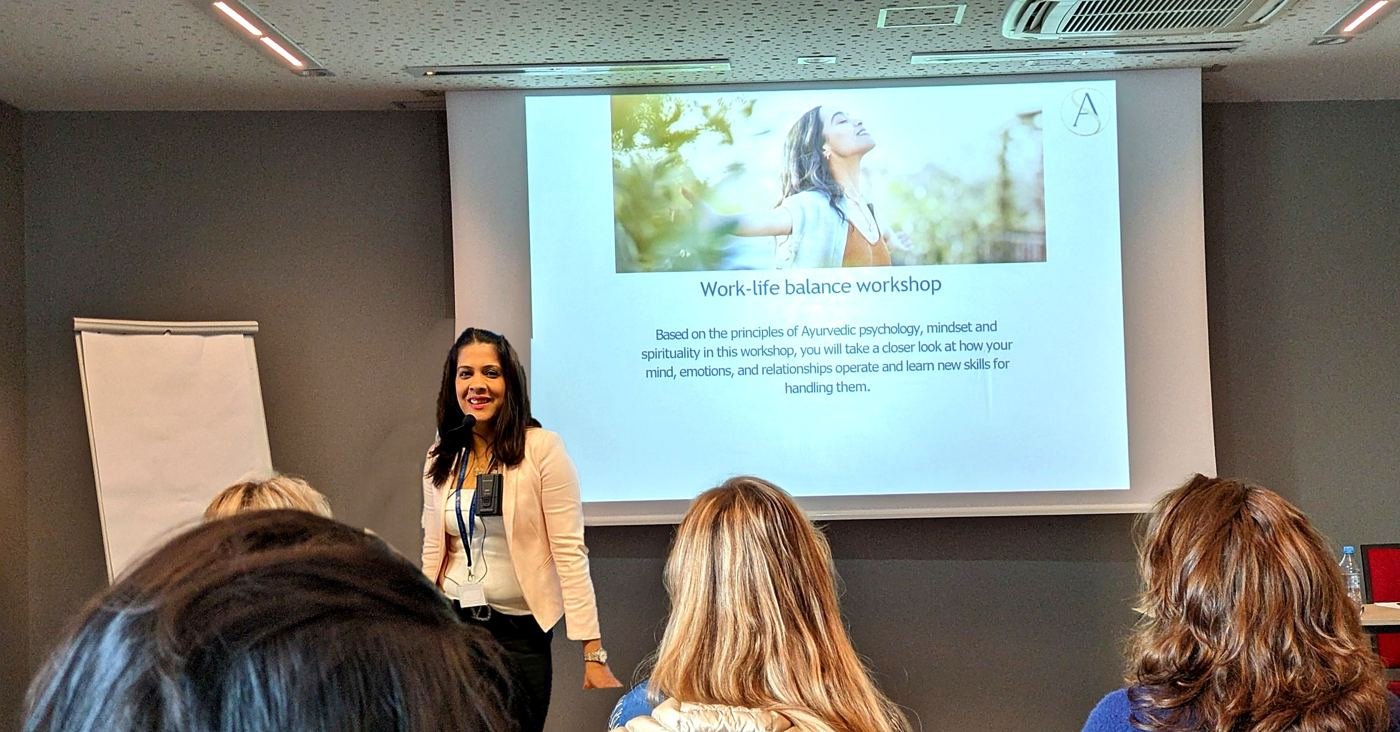
Dr. Shivani Sood
Ayurvedic doctor and transformational coach. After a wrong diagnosis in 2003, she returned to Ayurveda determined to heal people holistically, with a focus on the psychology of wellbeing.
Frequently asked questions
Do I need to complete Level 1 first?
Yes. Level 2 builds directly on Level 1. If you have completed equivalent Ayurvedic training elsewhere, book a short call with Dr. Shivani and she will advise you.
I took the Level 1 self-study version. Can I join?
Yes. Book a short call with Dr. Shivani first, so she can look at your case study and make sure Level 2 is the right next step for you. You will also need to pass the Level 1 exams before Level 2 begins.
How big is the group?
At most 12 students. That keeps the live classes personal: everyone presents cases and gets Dr. Shivani’s feedback.
When does the course start, and how often does it run?
Level 2 runs once a year. The next intake starts in April to May 2027 and lasts about eight months, including a holiday break, the practical phase and the final exam.
When are the live classes?
Twice a week on set days, usually Tuesday and Thursday, early in the morning: about 6:30 or 7:00 am CET (6:00 am UK time). The days are confirmed for each group. Every class is recorded, and you have two years of access to the platform.
How much time do I need each week?
About 3 hours of live classes a week, plus the recorded lessons and your own practice. The masterclass and practice weeks after each block give you time to catch up.
Who are the practice clients?
You bring three people yourself for your supervised consultations, and Dr. Shivani also arranges clients for you at a later stage. You prepare and lead each consultation, and she supervises and gives feedback. You also bring your own cases, from people you know, for presentation in class.
Do I have to appear on social media?
The visibility training includes one educational talk on an Ayurvedic topic. It is a guided, supportive step, prepared with the team.
Can I treat diseases after Level 2?
You will be able to give professional Ayurvedic support for common and chronic conditions, alongside the client’s medical care. What you may do legally depends on the country you work in; in some countries treating illness is reserved for licensed practitioners. The course shows you how to work within those rules.
What certificate do I receive?
After the written and oral exams, you receive the Professional Ayurvedic Consultant, Level 2 certificate. It is a Shivani Ayurveda qualification, based on international standards for training professional Ayurvedic consultants, and it is recognised for work within the consultant’s scope of practice. Rules for practising differ from country to country, so please check your own country’s regulations, including whether your work needs to be supervised. Once you have passed the exams, we give you full support with the documents your country asks for to verify the education you have completed.
Can I pay in instalments?
Yes, 9 monthly payments: €275 for Level 1 graduates, €305 during the early bird, and €390 after the early bird. Reserve your seat with the first payment; the rest start when the course begins. The instalment plan costs a little more in total, so the one-time payment is the best deal. See the full terms and refunds.
What is the Level 1 graduate price?
If you have completed Level 1 with us, Level 2 costs €2,250 (or 9 monthly payments of €275), instead of the early-bird price of €2,500 or the full price of €3,200.
Can I get a refund?
Level 2 students already know us from Level 1, so all sales are final, and an instalment plan is paid in full even if you stop the course. If you are unsure, book a call with Dr. Shivani before you reserve your seat.
What comes after Level 2?
The internship: live practice hours after the course, where you run workshops or practise and work at the clinic, to complete your year of training. Then the Ayurvedic Consultant Diploma, and optionally the Therapist track: Marma Therapy, Level 1 online, the 4-week Ayurvedic Therapist Training in India, a 1-month internship with live patients, and certification as a Professional Ayurvedic Therapist.